
Planning a trip to Europe used to be simple for many Australians. Book a flight, pass through a Middle Eastern hub, and arrive in a major European city within a day. But the ongoing conflict in the Middle East has started to disrupt that long-established route. Aviation experts now say Australians may need to rethink travel plans for the next several months as the situation continues to evolve.
The conflict has already begun affecting airspace, airport hubs, and fuel costs. Because Australia relies heavily on Middle Eastern stopovers to reach Europe, the disruption is hitting Australian travelers harder than many others. Flights are being rerouted, schedules are changing, and ticket prices may rise significantly. For anyone planning a European summer holiday, the coming months could be unpredictable.
This article explains why Australian travelers are particularly affected, what changes airlines are making, how airfares may be impacted, and what passengers should do if they already have bookings.
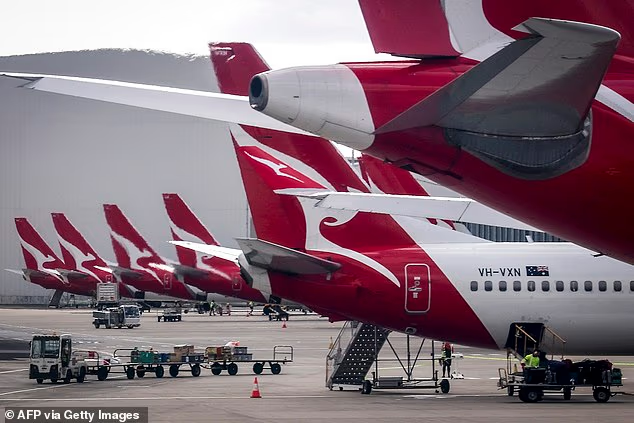
Why the Middle East Is Critical for Australia–Europe Flights
Most flights from Australia to Europe cannot travel nonstop due to distance. Instead, they rely on major aviation hubs located in the Middle East. Cities such as Dubai, Abu Dhabi, and Doha have become key stopover points for passengers traveling between Australia and Europe.
Over the past two decades, airlines built their international networks around these hubs. The model worked well because it allowed airlines to connect long-haul flights efficiently. Travelers from cities like Sydney, Melbourne, Brisbane, and Perth would typically fly to a Middle Eastern hub before continuing on to destinations like London, Paris, Rome, or Frankfurt.
This structure means that any disruption in the region immediately affects flights between Australia and Europe.
Aviation expert Professor Ron Bartsch, chairman of Avlaw Consulting and former head of safety and regulation at Qantas, says Australian travelers are among the most affected by the current situation.
He explains that Australia’s reliance on Middle Eastern transit routes makes the country particularly vulnerable when conflict spreads across that region.
For many travelers, these hubs are not just convenient stops—they are essential links in the global travel network.
Airspace Restrictions Are Only Part of the Problem
Airspace closures during conflicts are not new in aviation. Airlines have previously rerouted flights to avoid dangerous areas, including during the war in Ukraine. In those situations, aircraft simply took longer routes around restricted zones.
However, the current problem is more complex because it involves aviation hubs themselves.
If a specific airspace closes, airlines can often fly around it. But when airports or transit hubs become targets or are forced to reduce operations, the entire travel network becomes unstable.
Aircraft flying from Australia often depend on these hubs for refueling, crew changes, and passenger transfers. Without them, airlines must redesign routes entirely.
Professor Bartsch notes that most aircraft operating between Australia and Europe cannot fly the entire distance nonstop. That limitation forces airlines to look for alternative stopover points.
As a result, the current conflict is not just causing minor delays—it is forcing airlines to rethink how they operate long-haul flights between continents.
Airlines Searching for Alternative Routes
With Middle Eastern hubs under pressure, airlines are already exploring alternative routes to Europe.
Instead of routing through Dubai or Abu Dhabi, flights may begin passing through major Asian cities such as:
- Bangkok
- Singapore
- Hong Kong
- Manila
These locations already serve as international aviation hubs and could take on additional traffic as airlines adjust.
Airlines that operate codeshare partnerships may also rely more heavily on regional carriers in Asia to move passengers toward Europe.
For example, an Australian traveler might now fly from Sydney to Singapore before connecting to a European carrier heading to London or Paris.
While this approach helps maintain travel options, it can create new challenges. Routes may become longer, connections may increase, and flight availability could become more limited.
Passengers may also experience more crowded flights as airlines shift capacity to these alternate routes.
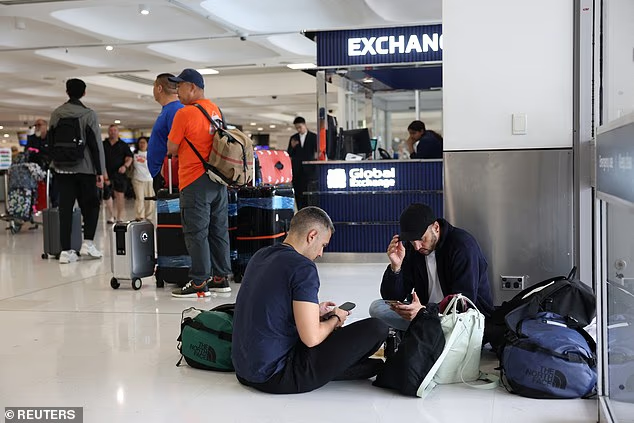
Rising Airfares Likely in the Coming Months
One of the most immediate effects travelers may notice is the rising cost of airline tickets.
Professor Bartsch warns that airfares could increase significantly over the next several months. Several factors are driving the price increases.
Higher Fuel Costs
Military conflict in the Middle East often affects global energy markets. Aviation fuel prices tend to rise quickly when instability threatens oil production or shipping routes.
Since fuel is one of the largest expenses for airlines, higher fuel costs almost always lead to more expensive tickets.
Reduced Flight Availability
If airlines must avoid certain routes or reduce operations through certain hubs, the number of available flights can drop.
Basic economics takes over when supply falls while demand remains high. Fewer flights mean airlines can charge higher fares.
Increased Travel Demand
European summer remains one of the most popular travel seasons for Australians. Even with disruptions, many travelers still plan to take their holidays.
When demand remains strong and flights become limited, prices often rise sharply.
According to aviation experts, these conditions could affect travelers for at least four to five months.
Government Monitoring the Situation Closely
Australian officials are closely monitoring the conflict and its impact on international travel.
Foreign Affairs Minister Penny Wong says the situation has developed faster and more widely than many governments expected.
The rapid escalation of military activity across multiple countries has created uncertainty for airlines, travelers, and governments alike.
Officials say they will continue updating travel advice as new information becomes available.
The unpredictability of the conflict means the situation could change quickly. Airspace closures, security concerns, or operational disruptions could occur with little warning.
For this reason, authorities are urging Australians to stay informed and regularly check official travel advisories.
Travelers Urged to Think Carefully Before Booking
Government officials and aviation experts are advising travelers to carefully evaluate their plans before booking new trips.
While travel is still possible, the environment has become less predictable.
Passengers may experience:
- Route changes
- Flight cancellations
- Longer travel times
- Higher ticket prices
For people considering booking a European holiday in the next few months, flexibility will be important.
Travel insurance, flexible ticket options, and careful monitoring of airline announcements can help reduce risks.
Important Advice for Travelers With Existing Bookings
Despite the uncertainty, travelers who already booked flights are being advised not to cancel their trips immediately.
The Australian Travel Industry Association warns that canceling a ticket voluntarily could result in losing consumer protections.
Many airlines provide full refunds or free rebooking options if they cancel a flight or significantly change the schedule. However, those protections may not apply if the passenger cancels first.
Association chief executive Dean Long recommends waiting for the airline to contact passengers directly if changes become necessary.
Travelers should also check airline apps or travel agency platforms for updates regarding rebooking or refund options.
In many cases, airlines may allow passengers to change travel dates without fees, especially during major disruptions.
Canceling prematurely could leave travelers out of pocket if they lose refund eligibility.
Flights Continue Despite the Conflict
Although the situation remains tense, flights between the Middle East and Australia have not completely stopped.
One of the first flights from Dubai to Sydney since the conflict began recently landed safely in Australia. The aircraft, an Emirates Airbus A380 capable of carrying more than 400 passengers, departed Dubai early in the morning and arrived in Sydney late that evening.
The arrival created emotional scenes at the airport as travelers reunited with family members after uncertain journeys.
Additional flights have been scheduled to help bring Australians home from the region.
These include flights departing from Dubai and Abu Dhabi bound for major Australian cities such as Sydney and Melbourne.
However, officials warn that schedules may change quickly.
Flights could still be canceled at short notice depending on security conditions or operational challenges.
Government Preparing Contingency Plans
Authorities say they are also preparing contingency plans in case the situation worsens.
These plans may include arranging additional flights to assist Australians stranded overseas if commercial travel becomes more difficult.
Government agencies are working with airlines and international partners to monitor the safety of travel routes and ensure citizens can return home if needed.
However, officials emphasize that commercial flights remain the primary option for most travelers.
What Travelers Should Do Right Now
For Australians planning European travel in the coming months, a few simple steps can help reduce stress and financial risk.
Stay Updated
Travel advisories and airline announcements can change quickly during conflicts. Checking official government travel websites and airline notifications regularly is essential.
Use Flexible Tickets
If booking a new trip, choose airlines that allow date changes or offer flexible travel options.
Monitor Airline Apps
Airline apps and travel agency platforms often provide the fastest updates regarding route changes, cancellations, or rescheduling.
Avoid Canceling Too Early
If you already booked a trip, wait for the airline to initiate changes before canceling. This helps preserve refund rights and rebooking options.
Consider Alternative Routes
Flights through Asia may become more common in the coming months, so travelers should be open to different connection points.
The Next Few Months Could Be Uncertain
The conflict in the Middle East has created a ripple effect across global aviation, and Australian travelers are feeling the impact more than most.
Because flights to Europe depend heavily on Middle Eastern transit hubs, disruptions in that region quickly affect travel routes, schedules, and ticket prices.
Airlines are already exploring new routes through Asia, but the transition may take time. In the meantime, travelers should expect potential delays, longer journeys, and higher airfares.
Experts believe the situation could continue affecting travel for several months.
For Australians dreaming of a European summer holiday, careful planning and flexibility will be key.
Travel is still possible—but for now, the journey may look very different from what travelers expected.