
Bacolod is one of those Philippine destinations where you can build an entire vacation around food and still have plenty to explore between meals.

You can start the morning with a local breakfast, spend the afternoon exploring historic houses, visit The Ruins before sunset, and finish the day with chicken inasal and dessert.
The city is also a convenient base for exploring northern Negros Occidental. Talisay and Silay are close enough to include in a short trip, so you don’t have to change hotels every night.
For first-time visitors, three days and two nights is a good introduction. It gives you time to explore Bacolod’s food scene, visit its best-known attractions, and take a short heritage trip outside the city.
This guide covers transportation, accommodation, tourist spots, food, a complete 3D2N itinerary, and a realistic budget.
Bacolod Travel Guide: Quick Facts
| Travel Information | Details |
|---|---|
| Destination | Bacolod City, Negros Occidental |
| Region | Western Visayas |
| Airport | Bacolod–Silay Airport (BCD) |
| Recommended stay | 3 days, 2 nights |
| Best base | Lacson Street area or central Bacolod |
| Famous food | Chicken inasal, piaya, napoleones, kansi |
| Main attractions | The Ruins, San Sebastian Cathedral, Silay heritage houses |
| Best travel period | Generally December–May for outdoor sightseeing |
| Festival highlight | MassKara Festival, traditionally in October |
| Estimated 3D2N budget | ₱5,000–₱9,000 per person, excluding flights |
Why Bacolod Is Worth Visiting
Bacolod is the capital of Negros Occidental, a province historically associated with the Philippine sugar industry.
That history influenced the region’s architecture, economy, cuisine, and cultural traditions.
The city is famous for chicken inasal, but its food scene goes well beyond grilled chicken. Travelers can try kansi, local pastries, sweets, and dishes influenced by Negrense home cooking.
Bacolod is also a useful gateway to nearby heritage attractions. Silay has ancestral houses associated with prominent families from the sugar industry’s past, while Talisay is home to The Ruins.
Unlike destinations that require long boat transfers or difficult mountain roads, many Bacolod attractions are accessible through ordinary road transportation.
That makes it a good choice for couples, families, solo travelers, and groups looking for a relatively easy long-weekend vacation.
How to Get to Bacolod From Manila and Cebu
Manila to Bacolod by Plane
Flying is the fastest option from Metro Manila.
Flights arrive at Bacolod–Silay Airport (BCD), located in Silay City, Negros Occidental.
Flight time from Manila is generally around 1 hour and 15–30 minutes.
Check schedules and fares with Cebu Pacific or Philippine Airlines.
Bacolod–Silay Airport is in Silay, not central Bacolod. Allow roughly 30–60 minutes for the road transfer, depending on traffic and your hotel location.
For planning, set aside approximately ₱250–₱600 per person for shared airport transportation or ₱500–₱1,000 for a private transfer. These are budgeting allowances, not confirmed operator quotations.
Cebu to Bacolod by Ferry
Travelers from Cebu can use sea transportation to Negros Occidental, including services connecting Cebu with Bacolod or nearby ports, depending on the operator and sailing schedule.
Ferry duration varies substantially by route and vessel type.
Before purchasing a ticket, confirm the departure terminal, arrival port, travel duration, baggage rules, and onward transportation to Bacolod.
Don’t assume every Cebu–Negros ferry arrives directly in Bacolod City.
Getting Around Bacolod
Jeepneys are useful for low-cost city transportation, while taxis and app-based car services can be more convenient for visitors unfamiliar with the routes.
For The Ruins and Silay heritage attractions, a private car or arranged driver can save time.
If you use a taxi for a multi-stop trip, agree on the arrangement before departure. Ask whether waiting time, parking, and return transportation are included.
Best Tourist Spots in Bacolod and Nearby Cities
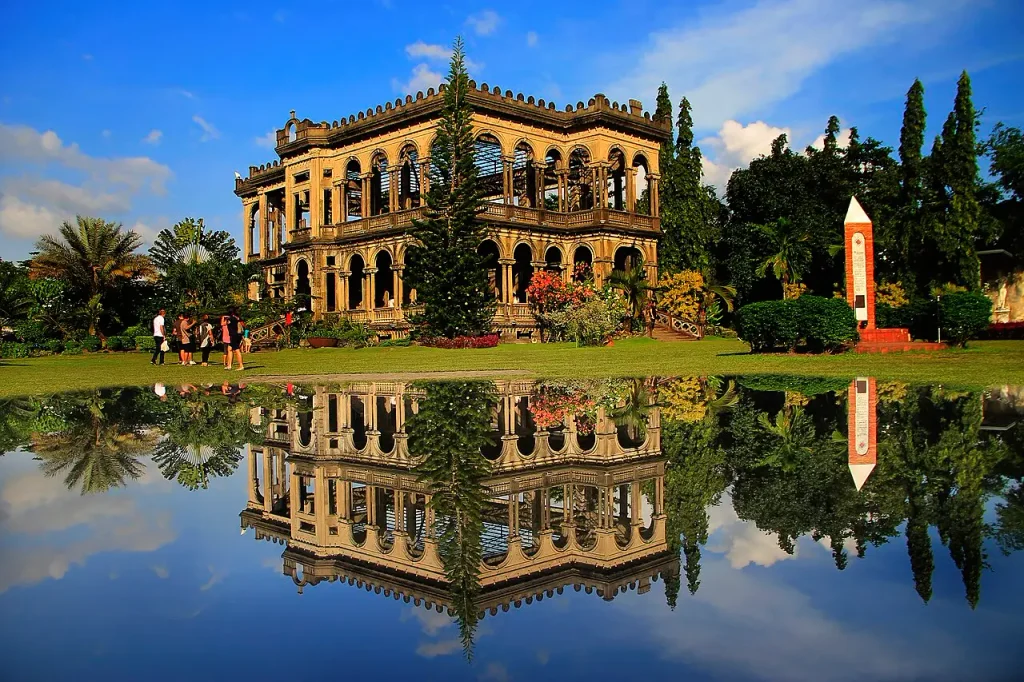
1. The Ruins in Talisay
The Ruins is one of Negros Occidental’s most recognizable attractions.
Located in Talisay City, it consists of the remains of a grand ancestral mansion built for Don Mariano Ledesma Lacson.
The building’s architecture and landscaped grounds make it a popular photography destination.
Late afternoon is particularly attractive because of the changing light, although visitors should check current opening hours and lighting schedules.
Travel tip: Combine The Ruins with a Silay heritage tour to reduce unnecessary backtracking.
2. San Sebastian Cathedral
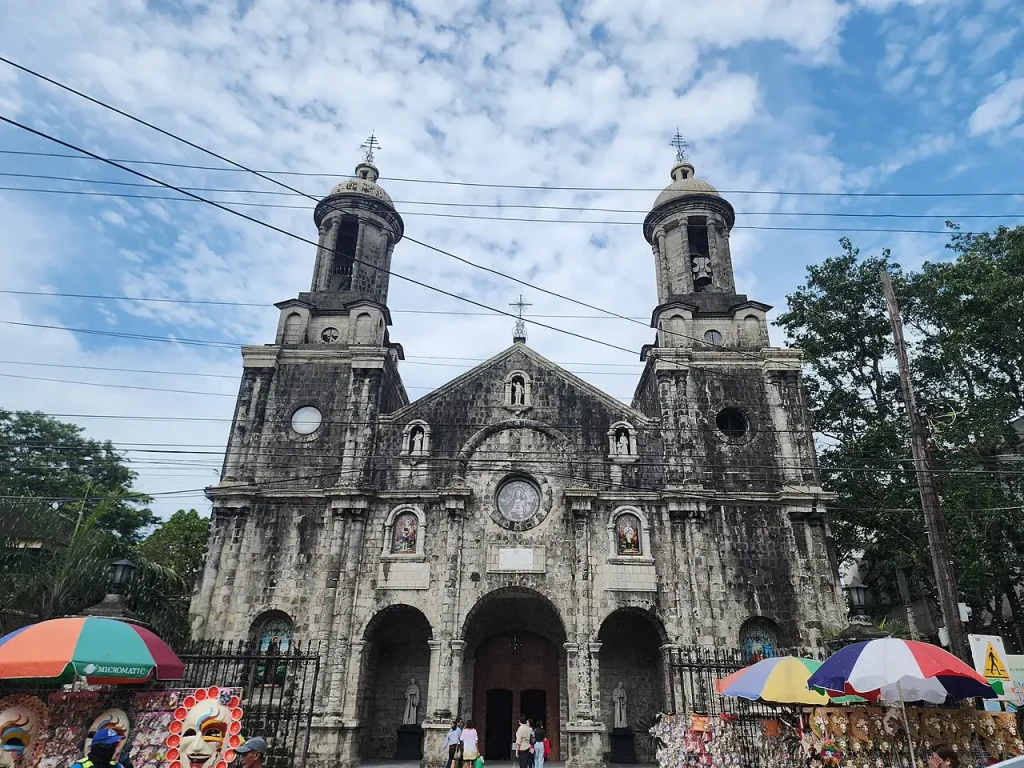
San Sebastian Cathedral is a major religious and historic landmark near Bacolod’s public plaza.
Its central location makes it easy to include during a downtown walking tour.
Visitors should dress respectfully and avoid disturbing religious services.
3. Balay Negrense
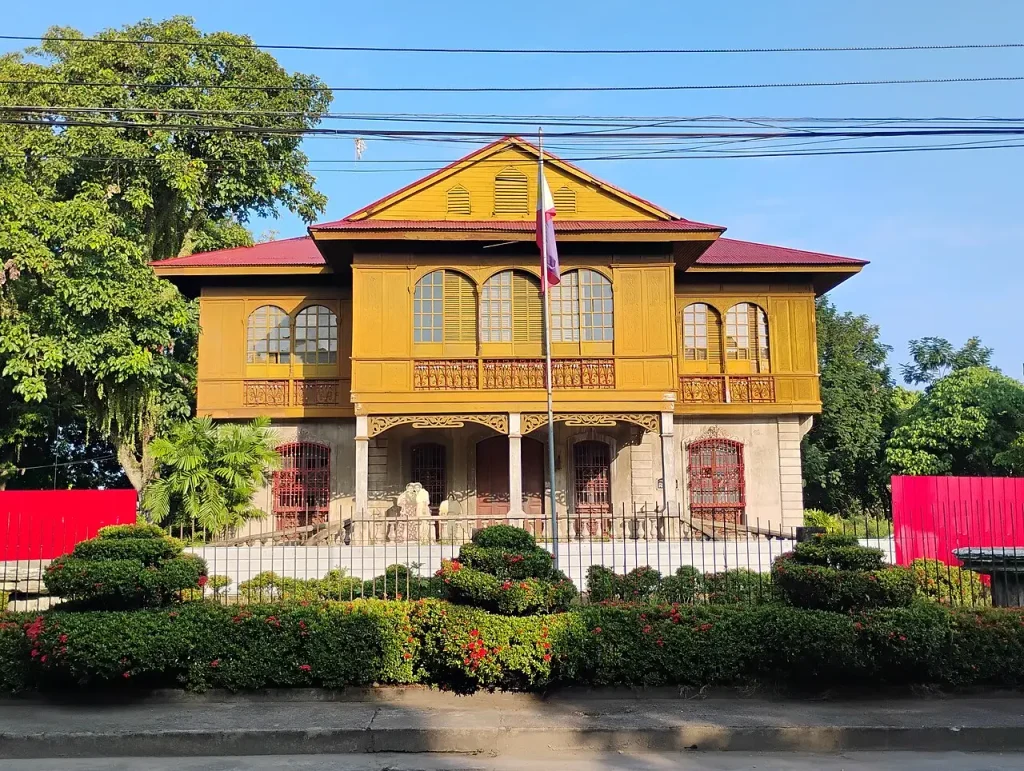
Balay Negrense is an ancestral house museum in Silay City.
It introduces visitors to domestic life during the sugar industry’s prosperous period.
The building and its exhibits provide an opportunity to understand the history of Negros Occidental beyond its modern urban centers.
Confirm the museum’s current admission fees and opening schedule before visiting.
4. Bernardino Jalandoni Museum
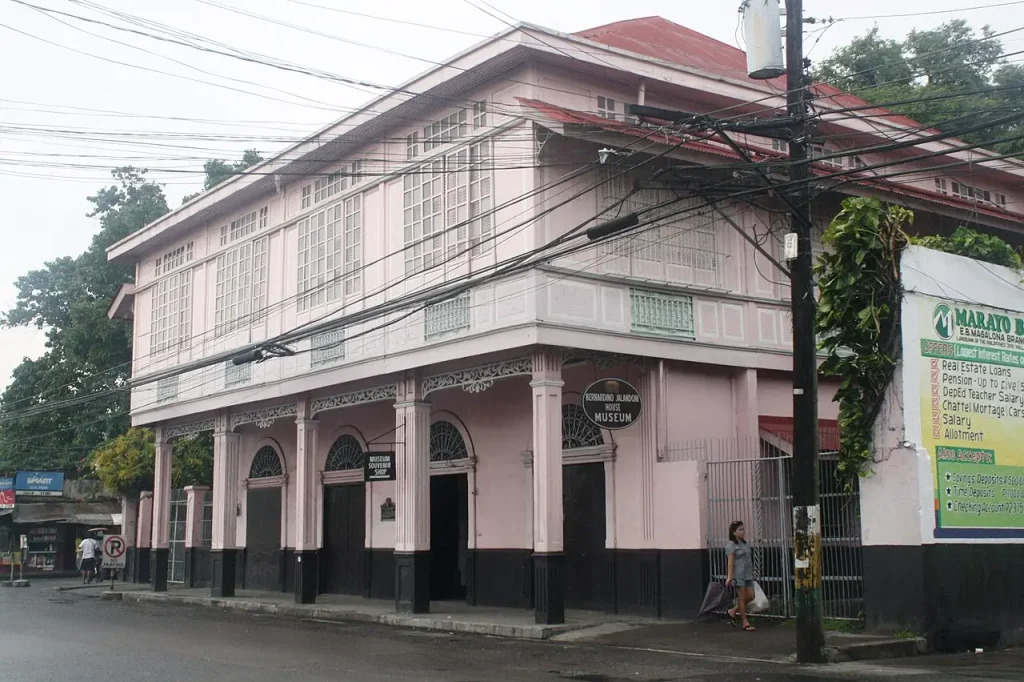
Also known as the Pink House, Bernardino Jalandoni Museum is another important heritage property in Silay.
It’s worth visiting for travelers interested in architecture and the province’s social history.
The museum can be included in the same excursion as Balay Negrense.
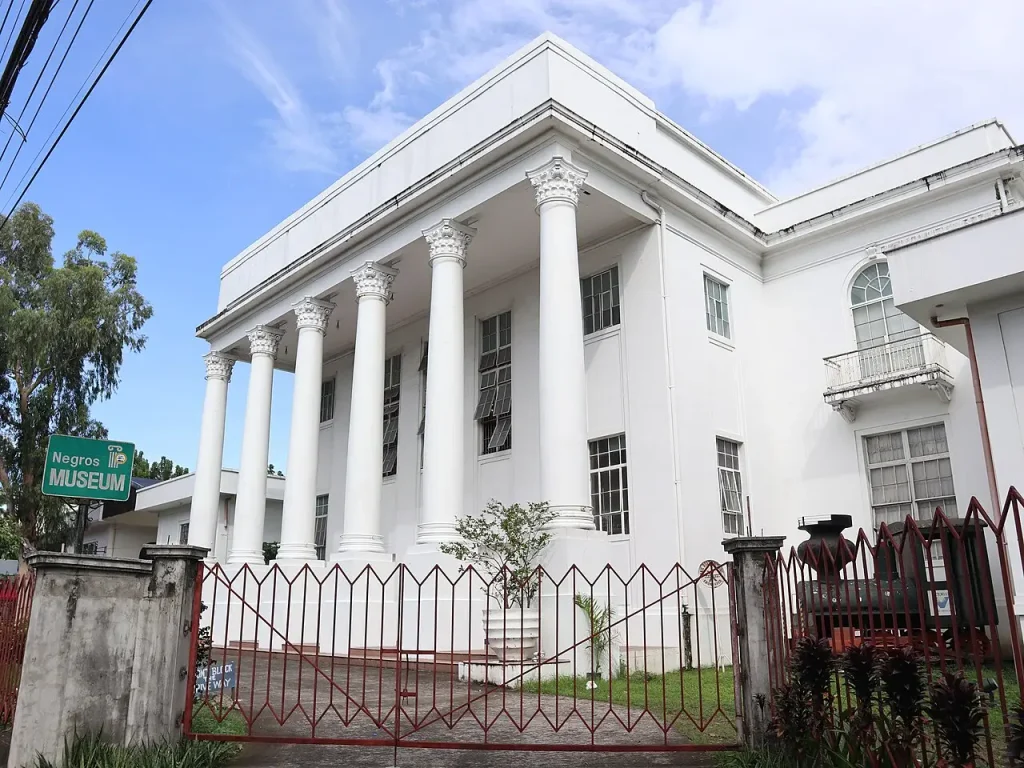
5. The Negros Museum
The Negros Museum is dedicated to the history, culture, and artistic heritage of Negros.
It’s a useful indoor attraction, particularly during hot or rainy weather.
Visitors interested in local history should consider adding it to their downtown itinerary.
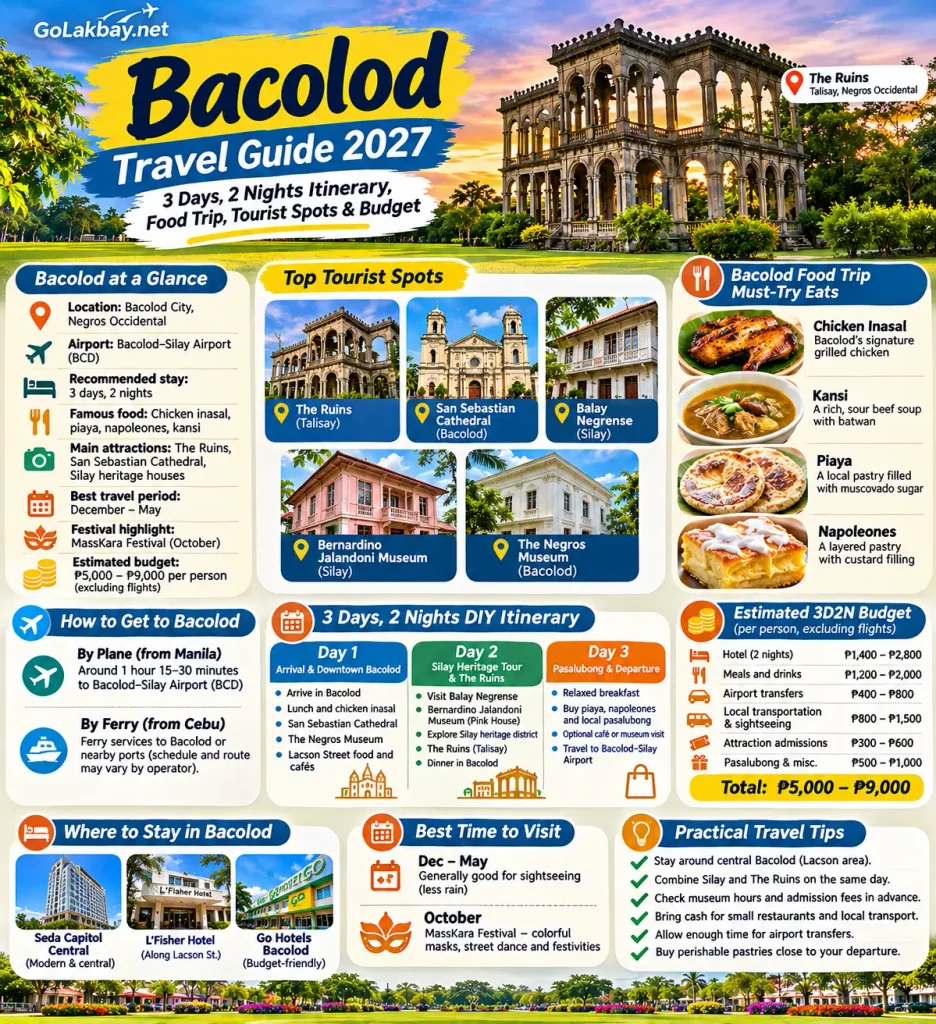
Bacolod 3 Days, 2 Nights DIY Itinerary
Day 1: Arrival, Downtown Bacolod and Food Trip
Morning: Arrive at Bacolod–Silay Airport and travel to your hotel.
After checking in or leaving your luggage, have lunch at a local restaurant. Start with chicken inasal, one of Bacolod’s signature dishes.
Afternoon: Visit San Sebastian Cathedral and explore the nearby downtown area. If the museum is open, include The Negros Museum.
Evening: Explore the restaurants and cafés around Lacson Street.
Overnight: Bacolod City.
Day 2: Silay Heritage Tour and The Ruins
Morning: Have breakfast and leave for Silay.
Visit Balay Negrense and Bernardino Jalandoni Museum, subject to current opening arrangements.
Walk through the heritage district and admire the city’s ancestral architecture.
Midday: Have lunch in Silay or continue toward Talisay.
Late afternoon: Visit The Ruins. Allow time to explore the grounds and take photographs before sunset.
Evening: Return to Bacolod for dinner. Try kansi or another Negrense specialty.
Overnight: Bacolod City.
Day 3: Pasalubong Shopping and Departure
Morning: Have breakfast and enjoy a relaxed morning.
Buy local products such as piaya, napoleones, and other pastries. Check shelf-life and packaging requirements if you’re flying.
If your flight departs late in the afternoon, you can include one additional café or museum visit.
Allow sufficient time for the journey to Bacolod–Silay Airport.
Bacolod Travel Budget 2027
The following estimates assume two travelers sharing accommodation. Airfare is excluded because promotional fares and holiday prices can vary considerably.
| Expense | Estimated Cost Per Person |
|---|---|
| Hotel, 2 nights | ₱1,400–₱2,800 |
| Meals and drinks | ₱1,200–₱2,000 |
| Airport transfers | ₱400–₱800 |
| Local transportation and shared sightseeing | ₱800–₱1,500 |
| Attraction admissions | ₱300–₱600 |
| Pasalubong and miscellaneous | ₱500–₱1,000 |
| Total | ₱4,600–₱8,700 |
A practical allowance is ₱5,000–₱9,000 per person, excluding flights. This includes a modest contingency.
Travelers staying in upscale hotels, taking private tours, or dining at higher-priced restaurants should budget more.
Where to Stay in Bacolod
The Lacson Street area is convenient for first-time visitors because of its restaurants, cafés, and access to city transportation.
Seda Capitol Central
Seda Capitol Central is a modern hotel near the Capitol area, suitable for travelers who prefer full-service accommodation and a central location.
L’Fisher Hotel
L’Fisher Hotel is an established hotel along Lacson Street, convenient for restaurants and city sightseeing.
Go Hotels Bacolod
Go Hotels Bacolod is a simpler accommodation option worth comparing for travelers prioritizing value over resort-style facilities.
Budget Inns and Guesthouses
For lower-cost accommodation, compare smaller inns and guesthouses around central Bacolod.
Check recent reviews, bathroom facilities, air-conditioning, and cancellation terms before booking.
Bacolod Food Guide: What to Eat
1. Chicken Inasal
Chicken inasal is Bacolod’s signature grilled chicken, traditionally marinated and basted with seasonings including calamansi, vinegar, and annatto.
Try it with rice, chicken oil, and dipping sauce.
For a classic inasal experience, explore established restaurants and local inasal establishments. Check current operating locations before visiting because establishments may relocate or undergo redevelopment.
2. Kansi
Kansi is a rich, sour beef soup associated with Negros cuisine.
Its distinctive flavor often comes from batwan, a souring fruit used in Western Visayas.
It’s particularly satisfying for travelers looking for a hearty local meal.
3. Piaya
Piaya is a thin, flat pastry traditionally filled with muscovado sugar.
It’s one of the most recognizable pasalubong products from Negros Occidental.
4. Napoleones
Napoleones is a layered pastry filled with custard and topped with sweet icing.
Buy it close to your departure time and follow storage instructions.
Best Time to Visit Bacolod
Bacolod can be visited year-round, although outdoor sightseeing is generally more comfortable during less rainy periods.
December to May
These months are often suitable for city sightseeing, but hot weather can be uncomfortable during midday.
Plan outdoor activities for the morning or late afternoon.
October: MassKara Festival
October is particularly associated with the MassKara Festival.
The festival is known for colorful masks, dance performances, and public celebrations.
Exact dates, venues, traffic arrangements, and event programs for 2027 should be confirmed once organizers release the official schedule.
Rainy Season
During the rainy season, keep outdoor plans flexible and check PAGASA weather advisories.
Practical Bacolod Travel Tips
- Stay around central Bacolod if you want easy access to restaurants and transportation.
- Combine Silay and The Ruins on the same day to reduce unnecessary backtracking.
- Ask about admission fees and opening hours before traveling to museums.
- Bring cash for small restaurants, markets, and local transportation.
- Allow additional time for airport transfers during peak traffic.
- Buy perishable pastries close to your departure and follow storage instructions.
- If traveling during MassKara, book accommodation well ahead of time and expect road closures.
Bacolod Tourist Attractions Map
Explore The Ruins, San Sebastian Cathedral, Balay Negrense, Bernardino Jalandoni Museum, and The Negros Museum on our interactive map.
Frequently Asked Questions About Bacolod
How many days do you need in Bacolod?
Three days and two nights is enough for a first-time visit covering the city, Silay heritage attractions, The Ruins, and several food stops.
How much should I budget for Bacolod in 2027?
Prepare approximately ₱5,000–₱9,000 per person for a 3D2N trip, excluding flights, based on shared accommodation and transportation.
Is Bacolod worth visiting?
Yes, especially for travelers interested in food, heritage architecture, museums, and relaxed city sightseeing.
Where is Bacolod airport?
Bacolod–Silay Airport is located in Silay, Negros Occidental, north of Bacolod City.
Is The Ruins located in Bacolod?
No. The Ruins is in neighboring Talisay City, although it’s commonly included in Bacolod itineraries.
Can you visit Bacolod without renting a car?
Yes. Taxis, jeepneys, and arranged transport can cover most activities. A hired driver may be more convenient for Silay and Talisay.
What is Bacolod famous for?
Bacolod is widely known for chicken inasal, the MassKara Festival, and its role as a gateway to Negros Occidental’s heritage attractions.
What is the best month to visit Bacolod?
For festival travel, October is the traditional MassKara season. For general sightseeing, many travelers prefer the relatively drier months, although weather varies.
Is Bacolod good for families?
Yes. The city offers museums, food attractions, historic sites, and relatively manageable road trips.
What pasalubong should you buy in Bacolod?
Piaya, napoleones, and other Negrense sweets are popular choices. Check storage requirements before traveling.
Final Thoughts: Is Bacolod Worth Visiting in 2027?
Bacolod is a good choice for travelers who want an easy city break with plenty of food, history, and nearby attractions.
Three days and two nights gives you enough time to explore the city, visit The Ruins, discover Silay’s ancestral houses, and enjoy the local food scene without rushing.
If you’re looking for a Visayas destination that doesn’t require island hopping or a complicated itinerary, Bacolod deserves a place on your 2027 travel list.
Plan Your Next Philippine Adventure
Explore more Philippine travel guides, destination ideas, and budget itineraries on GoLakbay.net.
Compare flights at GoLakbay Flights and explore accommodation options at GoLakbay Hotels.
Travel note: Prices are planning estimates and may change. Confirm current transportation schedules, accommodation rates, admission fees, and attraction availability before booking.