
Remote workers are constantly looking for places that combine affordable living, reliable internet, and a relaxed lifestyle. Many destinations promise that balance, but few deliver it as well as Siargao in the Philippines. What used to be a quiet surf island has grown into one of Southeast Asia’s most attractive hubs for digital nomads.
The big question most remote workers ask before relocating is simple: how much does it actually cost to live in Siargao?
The short answer is that Siargao can be surprisingly affordable compared to Western countries, but prices vary widely depending on lifestyle. Some nomads live comfortably on $1,200 a month, while others spend $2,500 or more enjoying island luxuries.
This guide breaks down the real cost of living in Siargao—from rent and food to coworking spaces and transportation—so you can decide if this tropical island fits your remote work lifestyle.
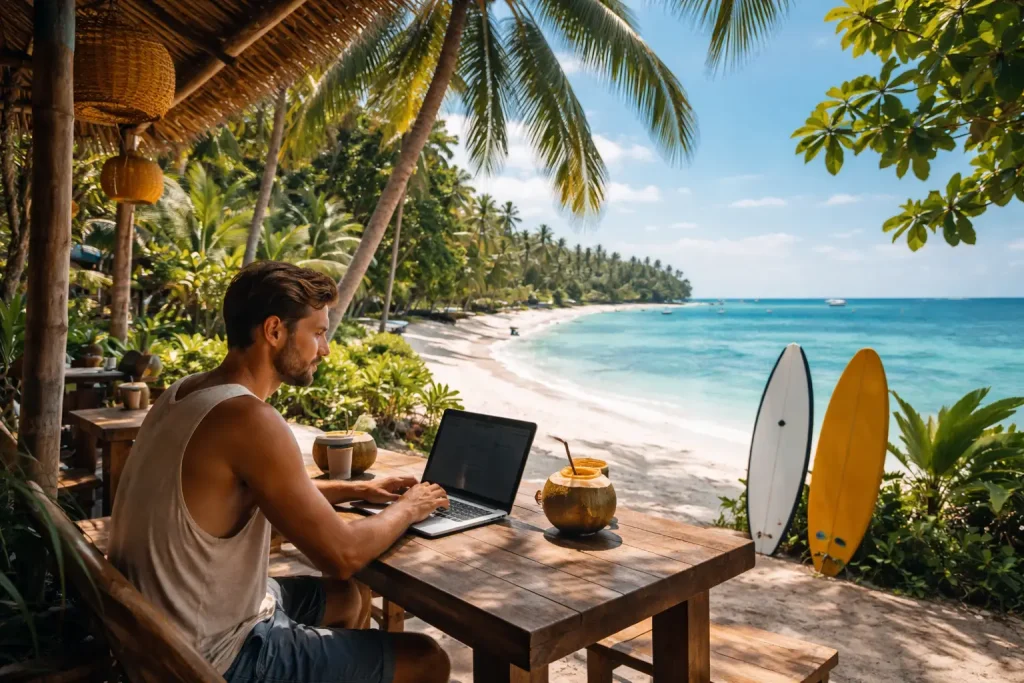
Why Digital Nomads Are Moving to Siargao
Over the last few years, Siargao has evolved into a popular destination for location-independent workers. The island combines a laid-back environment with a growing infrastructure that supports remote professionals.
Several factors attract digital nomads:
Strong community. Remote workers, entrepreneurs, surfers, and creatives from around the world gather in General Luna, the island’s main hub.
Affordable lifestyle. Compared to cities like Singapore, Tokyo, or Sydney, the cost of living is significantly lower.
Beautiful environment. White sand beaches, palm forests, lagoons, and surfing spots surround the island.
Work-life balance. Mornings can start with work, afternoons with surfing or island hopping.
Unlike large digital nomad hubs like Bali or Chiang Mai, Siargao still feels relatively small and relaxed. This balance is exactly why many remote workers stay longer than planned.
Average Monthly Cost of Living in Siargao
For most digital nomads, the cost of living falls into three rough categories depending on lifestyle.
Budget Lifestyle
$1,000 – $1,300 per month
Budget travelers usually stay in hostels or shared apartments and eat local food frequently.
Mid-Range Lifestyle
$1,400 – $2,000 per month
This is the most common range for digital nomads. It includes a private apartment, regular dining out, coworking access, and occasional island trips.
Comfortable Lifestyle
$2,200 – $3,000 per month
Nomads choosing luxury villas, imported food, and frequent activities will spend in this range.
Compared with Western countries, even the higher range remains relatively affordable.
Accommodation Costs in Siargao
Housing is the biggest monthly expense for most digital nomads.
General Luna is the main area where remote workers stay. It offers cafes, coworking spaces, restaurants, and surf spots within short distance.
Monthly Rent Prices
Hostels and shared rooms
$250 – $400 per month
Studio apartments
$450 – $800 per month
Private villas
$900 – $1,800 per month
Prices vary depending on proximity to the beach and amenities like air conditioning, kitchen access, and fiber internet.
Long-term rentals often cost less than short-term bookings on travel platforms.
Many digital nomads negotiate directly with property owners for monthly discounts.
Food and Dining Costs
Food costs depend heavily on whether you eat local meals or dine in tourist restaurants.
Siargao offers a mix of Filipino eateries, international restaurants, and beach cafes.
Local Food
Local carinderias serve affordable Filipino dishes.
Typical prices:
- Local meal: $2 – $4
- Fresh seafood plate: $5 – $8
- Street food snacks: $1 – $2
These options allow digital nomads to keep their food budget very low.
Restaurants and Cafes
Tourist restaurants cost more but still remain reasonable compared with Western prices.
Typical prices:
- Breakfast at cafe: $5 – $8
- Lunch or dinner: $8 – $15
- Coffee: $3 – $4
- Smoothie bowl: $6 – $9
A mix of local and international dining usually costs around $300 to $500 per month.
Grocery Costs
Cooking at home is possible but not always cheaper because imported goods are expensive on the island.
Typical grocery prices:
- Eggs: $2.50 per dozen
- Milk: $2 – $3
- Local fruits: $1 – $3
- Chicken: $4 – $6 per kilo
- Imported cheese: $6 – $10
A monthly grocery budget usually ranges from $120 to $250.
Many nomads combine groceries with dining out.
Internet and Coworking Spaces
Reliable internet is essential for remote workers. Siargao has improved connectivity significantly in recent years.
Fiber connections are now available in many accommodations.
Internet Costs
If internet is not included in rent:
- Fiber internet: $25 – $40 per month
- Mobile data: $10 – $20 per month
Coworking Spaces
Several coworking spaces operate in General Luna.
Monthly memberships usually include fast internet, air conditioning, and networking events.
Typical prices:
- Day pass: $7 – $10
- Weekly pass: $40 – $60
- Monthly membership: $120 – $180
Many digital nomads prefer coworking spaces for the social environment and stable internet.
Transportation Costs
Siargao is a small island, so transportation costs are minimal.
Most people rent motorbikes to explore.
Motorbike Rentals
Daily rental: $7 – $10
Monthly rental: $90 – $150
Fuel is also inexpensive. A full tank usually costs about $5.
Tricycles
Local tricycles are common for short trips.
Typical fare: $1 – $3 depending on distance.
Most digital nomads rely on motorbikes for convenience.
Health Insurance and Healthcare
Healthcare costs in the Philippines are relatively affordable.
However, most digital nomads maintain international health insurance for emergencies.
Typical insurance costs:
$40 – $120 per month depending on coverage.
Small clinics operate on the island, but serious medical cases may require travel to larger cities such as Cebu.
Entertainment and Activities
Siargao offers plenty of outdoor activities that contribute to the island lifestyle.
Popular activities include surfing, island hopping, yoga, and diving.
Typical prices:
Surfboard rental: $5 – $10
Surf lessons: $20 – $40
Island hopping tour: $25 – $40
Yoga class: $10 – $15
Gym membership: $40 – $60 per month
Many nomads budget $150 to $300 monthly for leisure activities.
Utilities and Monthly Bills
Utility costs depend on accommodation type.
Typical monthly costs:
Electricity: $40 – $120
Water: $5 – $10
Internet: $25 – $40
Air conditioning is the biggest factor affecting electricity bills.
Sample Monthly Budget for Digital Nomads
Here is a realistic mid-range monthly budget.
Accommodation: $650
Food and dining: $400
Coworking space: $150
Transportation: $100
Activities and entertainment: $200
Utilities and internet: $80
Estimated total: $1,580 per month
Many nomads live comfortably within this range.
Best Areas for Digital Nomads in Siargao
While Siargao is small, certain areas are more convenient for remote workers.
General Luna
This is the main digital nomad hub.
Benefits:
- Restaurants and cafes
- Coworking spaces
- Surf spots
- Nightlife
Most digital nomads choose this area.
Malinao
A quieter area just outside General Luna.
Benefits:
- Lower rent prices
- Less noise
- Close to beaches
Santa Fe
Popular with long-term residents seeking peace and nature.
Pros of Living in Siargao as a Digital Nomad
Relaxed lifestyle
The island environment encourages a slower pace of life.
Strong community
Nomads often connect through coworking spaces and events.
Affordable compared with Western cities
Living costs remain relatively low.
Outdoor activities
Surfing, snorkeling, and island tours are easily accessible.
Challenges of Living in Siargao
Despite its appeal, Siargao has some drawbacks.
Internet reliability
While improving, internet outages still occur occasionally.
Limited healthcare
Serious medical care may require travel to Cebu or Manila.
Supply shortages
Some imported groceries are difficult to find.
Weather disruptions
Typhoons can occasionally affect infrastructure.
Planning ahead helps minimize these challenges.
Tips to Save Money While Living in Siargao
Digital nomads who want to stretch their budget can follow a few strategies.
Rent long-term. Monthly rentals are cheaper than nightly bookings.
Eat local food. Filipino eateries offer great meals at low prices.
Share accommodation. Many nomads split villas or apartments.
Use motorbike rentals monthly. Long-term rentals reduce costs.
Avoid peak tourist season. Prices increase during holidays.
These strategies can reduce monthly expenses significantly.
Is Siargao Worth It for Digital Nomads?
Siargao offers a lifestyle that many remote workers dream about: working online while living in a tropical environment.
The island provides a balance between affordability, nature, and community. While it may not offer the large infrastructure of bigger cities, it makes up for it with simplicity and quality of life.
For digital nomads who enjoy surfing, beach living, and a slower pace, Siargao is one of the most attractive destinations in Southeast Asia.
Many people arrive planning to stay for a month and end up staying much longer.
Final Thoughts
The cost of living in Siargao depends largely on personal lifestyle choices. Budget travelers can live comfortably for around $1,200 per month, while those seeking more comfort may spend closer to $2,500.
Despite rising tourism, the island remains more affordable than many global digital nomad destinations.
For remote workers looking for a tropical base with a strong community and manageable expenses, Siargao continues to stand out as one of Southeast Asia’s most appealing islands.
FAQ About Living in Siargao
Is Siargao expensive for digital nomads?
Compared with Western countries, Siargao is affordable. Most digital nomads spend between $1,200 and $2,000 per month.
Is internet reliable in Siargao?
Fiber internet is available in many areas, but occasional outages still happen.
Can foreigners stay long-term in Siargao?
Yes. Many digital nomads stay using extended tourist visas available in the Philippines.
Is Siargao safe?
Siargao is considered one of the safer destinations in the Philippines, with a relaxed and friendly community.
What is the best time to live in Siargao?
The dry season from March to October is generally the most comfortable time to stay.